
HEART DISEASE: SCOPE AND IMPACT
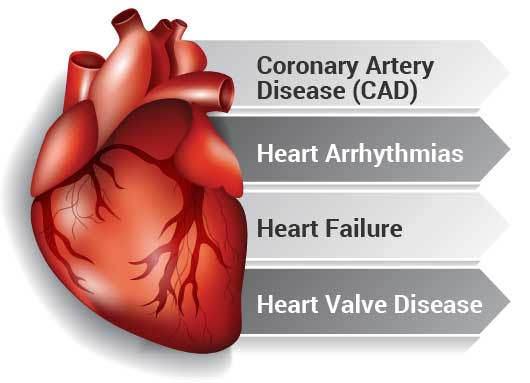
Heart disease is the leading cause of death for both men and women in the United States. It is also one of the most preventable. (CDC)

Coronary Heart Disease (also known as atherosclerosis) is the most common type of heart disease and accounts for 40% of heart-related deaths. (CDC)

In the United States, someone has a heart attack every 40 seconds. Every 60 seconds, more than one person in the United States dies from a heart disease-related event. (CDC)

The estimated annual incidence of heart attack in the United States is 720,000 new attacks and 335,000 recurrent attacks. The average age at the first heart attack is 65.6 years for men and 72.0 years for females. (CDC)

Roughly 40% of US adults are obese, one of the risk factors for heart disease. (CDC)

Heart disease is the leading cause of death for people of most racial/ethnic groups in the United States, including African Americans, Hispanics and whites. Nearly half of all African American men and women have some form of heart disease. For Asian Americans or Pacific Islanders and American Indians or Alaska Natives, heart disease is second only to cancer. (CDC)

Nearly 1 of every 3 (about 33.3%) of American adults have high levels of LDL cholesterol (the “bad” kind). (AHA)

The majority of Out of Hospital Sudden Cardiac Arrests (OHCA) occur in public settings (39.5%). In 2015, home or residence (27.5%) and nursing homes (18.2%) were the second and third most common locations of OHCA. (AHA)

Heart disease and stroke cost the United States over $320 billion annually. This total includes cost of healthcare services, medications and lost productivity. (CDC)

Coronary heart disease (CHD) deaths in the US recently reversed a long-term decline, rising by 9.3% between 2019 and 2022. While overall mortality fell for decades, the rate stabilized around 2010-2019 but surged again, with ~317,506 deaths in 2022 alone, effectively reversing a decade of progress. (CDC)
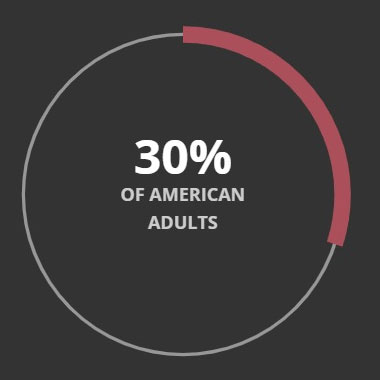
Almost 30% of American adults have elevated or stage 1 high blood pressure. High blood pressure is a major risk factor for heart disease, stroke, and congestive heart failure, as well as kidney disease.
(CDC)
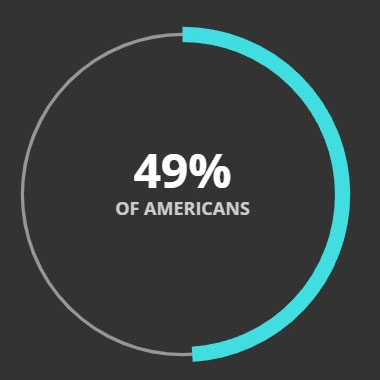
High blood pressure, high cholesterol, and smoking are key risk factors for heart disease. About half of Americans (49%) have at least one of these three risk factors.
(CDC)
About 1 in every 3 or 30.4% of US adults do not engage in leisure time physical activity.
(AHA)
WOMEN &
HEART DISEASE
- Heart disease is the leading cause of death for women in the United States. (CDC)
- Although heart disease is sometimes thought of as a “man’s disease,” around the same number of women and men die each year of heart disease in the United States. Despite increases in awareness over the past decade, only 54% of women recognize that heart disease is their number 1 killer. (CDC)
- While one in 31 American women dies from breast cancer each year, heart disease is the cause of one out of every three female deaths. That’s roughly one death each minute. (AHA)
- Fewer women than men survive their first heart attack. (AHA)
- 90% of women have one or more risk factors for developing heart disease or stroke.
- 80% of heart disease and stroke events may be prevented by lifestyle changes and education. (AHA)
Women and men are not the same when it comes to heart disease. In fact, the symptoms of heart disease and heart attack can be different in women and men and are often misunderstood. To learn more, we invite you to check out the links below:
Cedars-Sinai Medical Center Women’s Heart Center
Women’s Heart Alliance
A unique collaboration between two of American’s leading medical institutions – the Barbra Streisand Women’s Heart Center at Cedars-Sinai Heart Institute and the Ronald O. Perelman Heart Institute at New York-Presbyterian Hospital/Weill Cornell Medical Center
Heart Disease and Women
by the U.S. Department of Health & Human Services Office on Women’s Health
Listen to Your Heart: Women and Heart Disease
by the National Heart, Lung, and Blood Institute
Go Red for Women
by the American Heart Association
Heart Disease in Women: Understand Symptoms and Risk Factors
by the Mayo Clinic
Sources:
American Heart Association (AHA):
Heart Disease and Stroke Statistics
Go Red for Women Myths About Heart Disease
Centers for Disease Control and Prevention (CDC):
Division for Heart Disease and Stroke Prevention
Division for Heart Disease and Stroke Prevention, Women and Heart Disease Fact Sheet